Why Smart People Fall for Cyber Attacks: Cognitive Biases Explained Simply
Why Smart People Fall for Cyber Attacks: Cognitive Biases Explained 🧠
One of the most persistent myths in cybersecurity is that victims fall for attacks because they are careless or uninformed. In reality, many successful attacks target experienced, intelligent, and security-aware people.
At SECMONS, cyber attacks are analyzed as human-system interactions. Attackers do not rely on ignorance. They rely on predictable cognitive patterns that affect everyone — especially under pressure.
This article explains why smart people fall for cyber attacks, which cognitive biases are exploited, and why awareness alone does not eliminate risk.
Intelligence Does Not Equal Immunity 🎓
Technical knowledge and intelligence help, but they do not remove human limitations.
Even security professionals:
- multitask,
- operate under time pressure,
- trust familiar workflows,
- rely on mental shortcuts.
Attackers design campaigns to exploit how the brain works, not what people know. This is why attacks often succeed during busy moments, emotional stress, or routine tasks.
The Role of Cognitive Biases in Cyber Attacks ⚠️
Cognitive biases are mental shortcuts the brain uses to make quick decisions. They are essential for daily functioning — and highly exploitable.
Attackers build their campaigns around these biases, especially in phishing and scam scenarios.
Authority Bias: “This Looks Official” 🏛️
People tend to comply with perceived authority.
Attackers exploit this by impersonating:
- employers or executives,
- banks or government agencies,
- well-known brands or service providers.
Logos, formal language, and familiar processes reduce skepticism. This is why many phishing emails mimic internal workflows or routine notifications, as described in Phishing Attacks.
Urgency Bias: “I Need to Act Now” ⏰
Urgency narrows attention.
Messages that imply:
- account suspension,
- financial loss,
- missed deadlines,
- security incidents,
push users into fast decisions. Under urgency, people skip verification steps they would normally perform.
This bias is heavily used in attacks that lead to Account Takeovers and fraud.
Familiarity Bias: “I’ve Seen This Before” 🔁
Repeated exposure builds trust.
Attackers rely on:
- known brands,
- common email formats,
- routine language,
- predictable timing.
If something looks familiar, the brain categorizes it as low risk. This is why attackers study normal communication patterns before acting — especially in long-running scams.
Social Proof: “Others Do This Too” 👥
People look to others when uncertain.
Attackers exploit this by referencing:
- coworkers or friends,
- previous conversations,
- common user behavior,
- “many users affected” claims.
This technique is common in social engineering campaigns, where attackers want actions to feel normal rather than suspicious. See Social Engineering for broader patterns.
Commitment Bias: “I Already Started” 🔐
Once someone takes a small step, they are more likely to continue.
Attackers structure attacks as progressive flows:
- click a link,
- enter an email,
- confirm a detail,
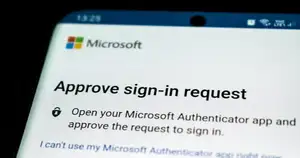
- approve a request.
Each step increases psychological commitment, making it harder to stop and reassess.
Why Awareness Alone Is Not Enough 🧠
Many victims recognize attacks after interacting with them.
This happens because:
- awareness fades under stress,
- routine overrides caution,
- context feels legitimate,
- partial trust has already been established.
This is why even people who “know better” still fall victim. Awareness helps, but it cannot eliminate cognitive bias.
How These Biases Enable Larger Attacks 🔗
Cognitive exploitation is rarely the final goal.
It is used to:
- harvest credentials,
- confirm active email addresses,
- bypass authentication,
- enable identity compromise.
This is why psychological manipulation often becomes the entry point to Identity Theft Protection incidents and long-term account abuse.
Reducing Risk Without Blaming Users 🧩
Effective defense does not assume perfect human behavior.
Instead, it focuses on:
- slowing down critical actions,
- reducing irreversible steps,
- adding friction where mistakes are costly,
- removing single-point failures like password reuse.
A practical baseline that supports this approach is outlined in the Cyber Hygiene Checklist.
Why Attackers Will Keep Using Psychology 🎯
Technical defenses evolve quickly. Human behavior does not.
As long as:
- people trust familiar patterns,
- urgency overrides caution,
- and systems expect fast decisions,
attackers will continue to target cognitive weaknesses.
Understanding these patterns helps shift security thinking away from “user failure” and toward system design that anticipates human limits.