Email Spoofing vs Phishing vs Business Email Compromise (BEC) Explained
Email Spoofing vs Phishing vs Business Email Compromise (BEC) 📧
Email-based attacks are often described using the same words, even though they rely on different techniques and serve different goals. “Phishing,” “spoofing,” and “BEC” are frequently used interchangeably — which creates confusion and leads to ineffective defenses.
At SECMONS, these attacks are treated as distinct mechanisms, not just variations of the same threat. Understanding the differences matters, because each attack type requires a different defensive focus.
This article explains how email spoofing, phishing, and Business Email Compromise (BEC) work in practice, how attackers combine them, and why mislabeling them creates blind spots.
Why These Attacks Are Commonly Confused 🧠
All three attack types:
- use email as a delivery channel,
- rely on trust and familiarity,
- aim to trigger user action rather than technical exploitation.
However, the technical mechanics and attacker intent are different. When defenses are designed without understanding those differences, attackers simply move to the weakest link.
What Email Spoofing Actually Is ✉️
Email spoofing is a technical manipulation of email headers to make a message appear as if it was sent from a trusted domain or sender.
In a spoofing-only scenario:
- the sender address is forged,
- the recipient sees a familiar name or domain,
- no account is necessarily compromised.
Spoofed emails are often used to:
- bypass basic trust checks,
- impersonate brands or colleagues,
- increase the success rate of other attacks.
Spoofing does not require interaction from the victim. It relies on misconfigured or missing email authentication controls, such as SPF, DKIM, and DMARC.
This is why proper email configuration is a foundational defense, as explained in Email Security.
What Phishing Is — and What It Is Not 🎣
Phishing is a social engineering attack designed to trick recipients into taking a specific action.
That action may include:
- entering credentials,
- clicking malicious links,
- opening weaponized attachments,
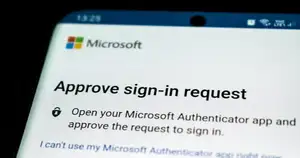
- approving authentication requests.
Phishing may use spoofed emails, but spoofing alone does not make an attack phishing. The defining element is user interaction.
Modern phishing campaigns often:
- closely mimic legitimate workflows,
- use urgency or authority pressure,
- adapt messaging in real time based on victim behavior.
A detailed breakdown of phishing mechanics is available in Phishing Attacks.
What Business Email Compromise (BEC) Really Means 💼
Business Email Compromise is not a single technique. It is a fraud model.
BEC attacks focus on:
- financial manipulation,
- payment redirection,
- invoice fraud,
- executive impersonation.
In many BEC cases, attackers do not use malware or links at all. Instead, they rely on:
- compromised email accounts,
- long-term observation of communication patterns,
- carefully timed requests that look routine.
BEC is especially effective because it blends into normal business operations. The emails often look boring, familiar, and legitimate.
How Attackers Chain These Attacks Together 🔗
In real-world incidents, these techniques are rarely isolated.
A common chain looks like this:
- Email spoofing is used to establish credibility.
- Phishing is used to capture credentials.
- The compromised mailbox enables a BEC fraud.
Once attackers control an inbox, they can:
- read past conversations,
- learn approval workflows,
- impersonate trusted contacts convincingly.
This is where email compromise becomes an enabler of Account Takeovers and financial loss.
Why BEC Often Bypasses Traditional Security Controls ⚠️
Many organizations focus defenses on:
- malicious links,
- attachments,
- known malware signatures.
BEC attacks often bypass these controls entirely because:
- emails contain no links or attachments,
- language is context-aware and personalized,
- requests align with real business processes.
Detection becomes difficult when the attack looks like routine communication rather than a technical anomaly.
The Role of Identity and Access Weaknesses 🔐
Email-based attacks frequently succeed because of broader identity weaknesses:
- reused passwords,
- weak account recovery controls,
- lack of multi-factor authentication,
- poor monitoring of login behavior.
This is why email compromise often escalates into Identity Theft Protection scenarios, especially when personal and business identities overlap.
Defensive Focus: Different Attacks, Different Priorities 🧩
Effective defense starts with recognizing what you are defending against.
Email spoofing requires:
- proper email authentication (SPF, DKIM, DMARC),
- monitoring of domain misuse.
Phishing defense focuses on:
- user awareness,
- credential protection,
- reducing password reuse,
- strong authentication controls.
BEC defense requires:
- payment verification processes,
- separation of duties,
- out-of-band confirmation for financial requests,
- careful monitoring of mailbox activity.
A practical baseline that supports all three areas is outlined in the Cyber Hygiene Checklist.
Why Correct Terminology Matters 🎯
When everything is called “phishing,” defenses become generic. Attackers exploit this confusion by choosing the least protected path.
Understanding whether you are dealing with spoofing, phishing, or BEC allows you to:
- apply the right controls,
- prioritize realistic risks,
- avoid false confidence in partial defenses.
Clear terminology leads to clearer security decisions.