How to Create Strong Passwords: Easy Methods & Examples (2025 Guide)
🔑 How to Create Strong Passwords (With Examples)
Weak passwords are one of the easiest ways hackers gain access to accounts.
A strong password protects your email, banking accounts, social media, cloud files, and every service you use online.
If you’re reviewing your basic cybersecurity habits, you may also find our general Cyber & Digital Security section useful.
🧭 Why Strong Passwords Matter
Hackers often rely on:
- Guessing common passwords
- Trying leaked credentials from past breaches
- Automated tools that try combinations in seconds
- Personal information found on social media
- Weak or reused passwords
Even basic malware or phishing attacks (explained in Social Engineering) try to steal login credentials.
A strong, unique password for each account stops most of these attacks.
🧪 What Makes a Strong Password?
A strong password should be:
- Long — at least 14–16 characters
- Unique — not used anywhere else
- Complex — a mix of letters, numbers, and symbols
- Random — not based on personal information
Avoid anything that includes:
- Your name
- Your birthday
- Your pet’s name
- “Password123”
- Repeated patterns
You can find more general security habits in our Tools & Checklists page.
🛠️ How to Create a Strong Password (3 Easy Methods)
1️⃣ Method 1: The Four-Word Passphrase
This is one of the simplest high-security techniques.
Format:
Word1-Word2-Word3-Word4
Examples:
- River-Cloud-Metal-Stone
- Silent-Orange-Drift-Window
Why it works:
Four unrelated words create a long password that’s extremely hard to crack.
2️⃣ Method 2: The Modified Sentence
Take a sentence and turn it into a password.
Example sentence:
“My first dog was named Luna in 2014.”
Converted password:
MfDwNL!2014
Why it works:
It’s based on something memorable but looks random to others.
3️⃣ Method 3: Random Generator + Password Manager
The strongest option is to let a password manager generate the password.
Examples:
- k2N$8p:fV9q#Zj4M
- P!7uKc93@aFt2NqX
Password managers store everything securely so you don’t need to remember long strings.
You can review safe password habits in our general Cyber & Digital Security content.
🚫 Common Password Mistakes to Avoid
- Using short passwords (under 12 characters)
- Reusing passwords across multiple accounts
- Using simple substitutions (P@ssw0rd is NOT strong)
- Saving passwords in plain text files
- Sharing passwords with others
- Logging into important accounts over public Wi-Fi
If you use public Wi-Fi often, explore privacy protections in Privacy & Identity Protection.
🧠 When Should You Change Your Passwords?
You should update passwords when:
- A website you use reports a breach
- You reused a password across multiple accounts
- You shared a password and now regret it
- You notice suspicious logins
- It’s been more than a year for critical accounts
Signs of account compromise are described in more detail under Fraud & Scams.
🔐 Additional Security Tips
✔ Enable Multi-Factor Authentication (MFA)
Even the strongest password can be stolen.
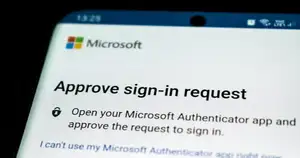
MFA adds a second barrier — usually a code or app notification — making unauthorized access extremely difficult.
Learn more about MFA inside the Cyber & Digital Security section.
✔ Use a Password Manager
Benefits include:
- Storing passwords securely
- Automatically generating strong passwords
- Autofilling logins
- Protecting against phishing websites
✔ Avoid Using the Same Password Everywhere
If one site is compromised, attackers will attempt to use your password on others.
This tactic is known as credential stuffing.
📚 Summary
Strong passwords are one of the simplest and most powerful ways to secure your digital life.
Long, unique, complex passwords — ideally stored in a password manager — dramatically reduce your risk.
To continue strengthening your cybersecurity foundation, explore: